Artificial intelligence now sits at the core of most modern smartphone operating systems. Android, iOS, and emerging platforms quietly use AI to study how people tap, scroll, speak, and shoot photos. These systems then adjust performance, battery use, and interface behavior in real time. What once relied on fixed rules now responds to context, routine, and intent. From camera processing and voice search to spam filters and live translation, AI systems constantly work in the background. The result is a shift from static, app‑centric phones to adaptive devices that feel more like partners than tools.
How AI Is Transforming the Smartphone Operating System Experience?
AI-Powered Performance Optimization and Resource Management
AI helps smartphone operating systems manage CPU, GPU, and memory far more intelligently than basic schedulers. The system watches which apps you open most, what time you use them, and how long they stay active. It then preloads likely apps, throttles background tasks you rarely touch, and reduces power for unused cores. Adaptive battery features rank apps by importance and limit those that drain resources. AI also tunes display refresh rates, network usage, and thermal limits based on live conditions. Users see faster app launches, smoother animations, and longer battery life without manual tweaking of settings or performance modes.
Personalized User Experiences Through Intelligent Learning
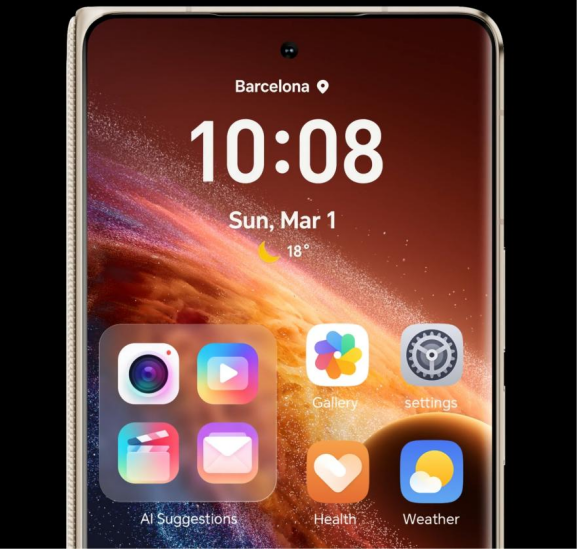
AI turns the smartphone interface into a personal layer that reflects each user’s habits. The OS learns frequent contacts, favorite apps, commute patterns, and media preferences. It then surfaces shortcuts on the home screen, suggests replies in messaging apps, and recommends content at the right moment. Predictive text and keyboard suggestions speed up typing by learning vocabulary and writing style. AI-driven recommendation cards may show boarding passes, reminders, or fitness stats before users search for them. Over time, the system refines notifications, reduces noise, and highlights what matters most. This personalization makes the experience feel tailored rather than generic.
Smarter Multitasking and Productivity Features
AI improves multitasking by predicting which apps users want to pair or switch between. The operating system in HONOR Magic V6 can suggest split-screen combinations, like email and browser, or calendar and maps, based on recent activity. Context-aware recommendations appear when copying text, offering to open note apps, translators, or password managers. AI also powers live transcription, automatic meeting summaries, and smart email categorization, which helps people manage information overload. On-device language models enable quick offline search across messages, files, and photos using natural phrases. By understanding context and intent, AI reduces the friction of juggling many tasks on a small screen.

The Future of AI-Driven Smartphone Operating Systems
Enhanced Security, Privacy, and Threat Detection
AI already strengthens smartphone security through anomaly detection and real‑time analysis of behavior. The OS can flag suspicious logins, unusual payment attempts, or apps that request risky permissions. Biometric systems use machine learning to improve face and fingerprint recognition accuracy while resisting spoofing. On‑device AI models scan for phishing links, scam calls, and malicious attachments without sending private content to the cloud. Future systems will layer behavior‑based authentication, where typing patterns, motion, and network habits verify identity passively. At the same time, privacy‑preserving techniques like federated learning and differential privacy help train models while keeping personal data sealed on devices.
AI Assistants and Natural Language Interactions
Voice assistants and AI agents will move from simple command executors to proactive, conversational organizers built into the OS. Instead of opening several apps, users will ask the phone to “plan a trip,” “summarize this chat,” or “organize my photos from last weekend.” Advanced language models will understand context across apps, remember preferences, and handle follow‑up questions. These assistants will appear as system‑level overlays, not just stand‑alone apps, and will read on‑screen content to act directly on it. As speech recognition and intent detection improve, more people will rely on voice or text chat with the OS as a main interface.
Emerging AI Innovations That Will Shape Future Smartphones
Future smartphone operating systems will lean heavily on on‑device AI chips and compact models. Generative AI will edit photos and videos, remove objects, rewrite text, and craft designs without cloud processing. Real‑time translation will work across calls, messaging, and video chats with low latency. Cameras will use AI to build 3D depth maps, simulate professional lighting, and capture better low‑light shots. Contextual interfaces may adapt layouts based on location, activity, and accessibility needs. AI could even help extend device life by predicting hardware failures and optimizing charging patterns. As these capabilities mature, the line between phone, assistant, and personal computer will blur.
Conclusion
AI is quietly rewriting how smartphone operating systems work, from the silicon level to the app layer. Performance tuning, personalization, smarter multitasking, stronger security, and natural language controls all rely on continuous learning. As models become more efficient and privacy‑aware, more processing will move onto the device, reducing latency and reliance on the cloud. Generative tools and context‑aware agents will shift phones from reactive screens into proactive problem solvers. Users will see less manual setup, fewer irrelevant alerts, and more helpful suggestions that match real needs. The future smartphone OS will feel less like software and more like a trusted digital companion.